water types
Water Types Comparison Table: Definitions, Uses and Safety Caveats
Use the water types comparison table to separate definitions from use cases: tap water depends on local reports and plumbing, filtered water depends on certification and maintenance, bottled and mineral water depend on labels, distilled water has a narrow use case, and electrolyte drinks belong mainly around sweat, heat, illness guidance, or sport context. None is automatically safest for every person.
This Water Types Comparison page is general education, not medical advice; water safety depends on local conditions, plumbing, treatment, and product labels, so check official reports or certified filters rather than relying on taste or marketing. If symptoms, fluid restriction, pregnancy, infant care, medication questions, or chronic disease are involved, use professional guidance instead of this water-type page.
What To Do First
Choose the row that matches your concern, then check the local report, label, filter certification, advisory, or professional guidance before switching.
When This Page Helps
A reader wants to choose water without brand claims or fear-based content.
Water types comparison table with definitions, use cases, label checks, and safety caveats.
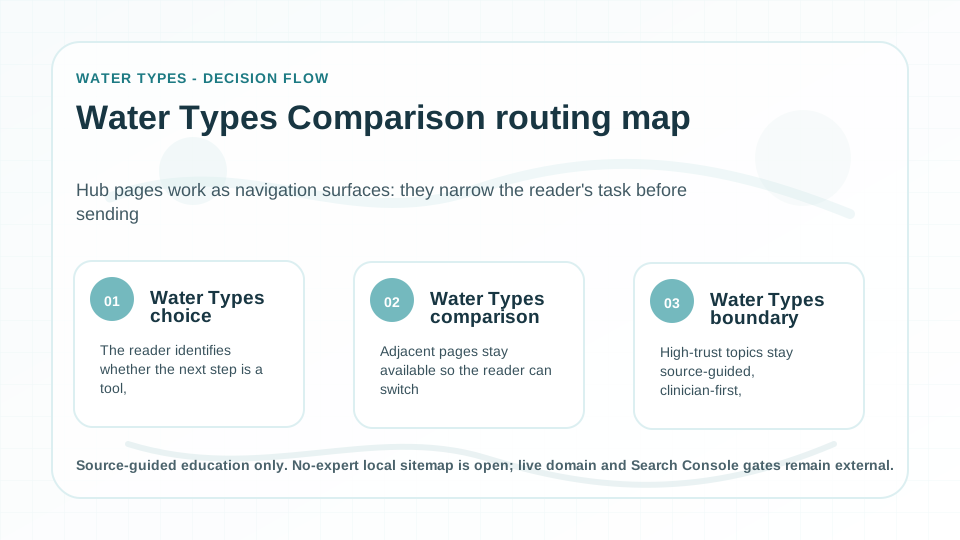
Water Types Comparison routing map
Hub pages work as navigation surfaces: they narrow the reader's task before sending them deeper.
The reader identifies whether the next step is a tool, person-specific page, seasonal page, or water-quality check.
Adjacent pages stay available so the reader can switch when their situation is more specific than expected.
High-trust topics stay source-guided, clinician-first, and separate from personal or local proof.
The real choice inside Water Types Comparison before switching
Guidance from U.S. Environmental Protection Agency and World Health Organization frames this page as practical education for a specific reader task, not as a universal drinking rule or medical instruction. The page should make the reader compare local reports, treatment, plumbing, advisories, and filter certification before making a switch.
Water Types Comparison is best for readers choosing between water options and trying to separate preference, evidence, and safety boundaries.
The common mistake is assuming the category name alone proves better hydration, better safety, or better health value.
Check the local water report, plumbing context, advisory, filter certification, or treatment method before treating the water type as safer. Use the answer to make a narrow choice, not a broad claim about every water type.
Stop and use a safety or quality page when the question involves symptoms, local advisories, lead, PFAS, wells, illness, or fluid restriction.
Before You Use This Page
- Name the real situation before applying Water Types Comparison; the page is strongest when the reader has a concrete task.
- Use the next action first: Check the local water report, plumbing context, advisory, filter certification, or treatment method before treating the water type as safer.
- Check the exception line before making the advice personal: Water safety depends on local reports, plumbing, and specific contaminants.
- Confirm the source context with U.S. Environmental Protection Agency before treating this as more than general education.
- Compare source, label, cost, access, taste, storage, and safety evidence before treating Water Types Comparison as better.
- Move to a water-quality page when the choice depends on plumbing, contaminants, advisories, wells, or filter certification.
Hydration question prep
Water Types: Compare Source, Treatment, Label, and Local Proof
Compare water categories by source, treatment, mineral or sodium line, storage, and local report before treating any type as healthier.
| Question | Record or compare | Keep outside the page |
|---|---|---|
| Context | Ordinary setting, heat, activity, access, and recent routine | A diagnosis or personal requirement |
| Existing instruction | Clinician fluid, sodium, medicine, kidney, heart, or pregnancy guidance | Changing a care plan from a website |
| Observable change | Plain words, timing, and functional effect | Deciding cause or urgency |
| Source role | Which public source explains a general concept | A personal fluid or electrolyte prescription |
| Next question | What to ask a clinician, pharmacist, coach, or caregiver | A self-directed correction plan |
Before you use it
- Keep clinician-set fluid limits unchanged unless the clinician changes them.
- Record timeline and context rather than trying to label the problem.
- Use local urgent or emergency services for severe or fast-changing concerns; this page does not judge urgency.
Safety boundary: This page supports general hydration education and question preparation. It does not diagnose dehydration or low sodium, prescribe fluid or electrolyte intake, override care instructions, or triage an individual.
Decision Checkpoints
Water Types Comparison TableCompare definitions, use cases, and safety caveats before switching.
Local report, advisory status, plumbing context, filter certification, and maintenance date
Use local proof before assuming taste equals safety.
Package label, source, mineral profile, storage, and cost
Use the label for what it can show and ignore broad purity claims.
Sweat, heat, illness guidance, sodium or sugar label, and personal restrictions
Use professional guidance for medical contexts and avoid overdrinking.
FAQ
Is water types comparison medical advice?
Water Types Comparison is general education, not professional medical advice. It should not replace diagnosis, treatment, prevention, a clinician's instructions, or urgent care when symptoms are serious.
What should I check first for water types comparison?
Check the local water report, plumbing context, advisory, filter certification, or treatment method before treating the water type as safer. For water types comparison, the first check should match the actual task rather than defaulting to more water.
Who should be more cautious with water types comparison?
Water safety depends on local reports, plumbing, and specific contaminants. That means water types comparison should be treated differently when symptoms, medical conditions, medications, pregnancy, infant care, older adult care, heat illness, or fluid restriction are involved.
What makes water types comparison different from a general hydration rule?
Water Types Comparison is different because local reports, plumbing, treatment, advisories, or filter certification decide the useful comparison before taste or convenience.
What still needs local proof
U.S. Environmental Protection Agency and World Health Organization support the general framing, but they do not verify an individual reader's health condition, home plumbing, product batch, race plan, or clinician instruction. Stop before turning this page into a personal fluid target. Water safety depends on local reports, plumbing, and specific contaminants.
- Water Types Comparison starts with local source, treatment, plumbing, advisory, report, or filter evidence.
- Taste and convenience should not outrank the facts the reader can verify at home or locally.
- Lead, PFAS, well-water, boil-water, and plumbing concerns need the matching quality page.
- U.S. Environmental Protection Agency anchors this section for Consumer Confidence Report guidance for checking local tap-water quality.
The use case for Water Types Comparison
A reader wants to choose water without brand claims or fear-based content. Treat it as a local source, treatment, plumbing, and verification question rather than a wellness upgrade by default.
- Water Types Comparison starts with local source, treatment, plumbing, advisory, report, or filter evidence.
- Taste and convenience should not outrank the facts the reader can verify at home or locally.
- Lead, PFAS, well-water, boil-water, and plumbing concerns need the matching quality page.
- World Health Organization anchors this section for WHO drinking-water quality guideline summary, source-to-tap safety context, risk boundaries, and why local verification still matters.
Proof to gather before switching
Check the local water report, plumbing context, advisory, filter certification, or treatment method before treating the water type as safer. Reports, advisories, plumbing, treatment records, and certification matter more than taste.
- Water Types Comparison starts with local source, treatment, plumbing, advisory, report, or filter evidence.
- Taste and convenience should not outrank the facts the reader can verify at home or locally.
- Lead, PFAS, well-water, boil-water, and plumbing concerns need the matching quality page.
- U.S. Environmental Protection Agency anchors this section for Consumer Confidence Report guidance for checking local tap-water quality.
The practical downside check
Compare everyday access, price, treatment method, plumbing context, maintenance, mineral content, storage, and whether the evidence solves the actual concern.
- Water Types Comparison starts with local source, treatment, plumbing, advisory, report, or filter evidence.
- Taste and convenience should not outrank the facts the reader can verify at home or locally.
- Lead, PFAS, well-water, boil-water, and plumbing concerns need the matching quality page.
- World Health Organization anchors this section for WHO drinking-water quality guideline summary, source-to-tap safety context, risk boundaries, and why local verification still matters.
Comparison Table: Definitions, Use Cases, Safety Caveats
Tap water: local supply checked through a Consumer Confidence Report; use when local quality and plumbing are acceptable; caveat is local advisories or home plumbing. Filtered water: tap water passed through a device; use for a named concern only when certification and maintenance match; caveat is old filters or wrong claims. Bottled or mineral water: packaged water with label details; use for convenience, taste, or a specific label profile; caveat is cost, storage, and marketing claims. Distilled water: treated to remove minerals; use only when the task specifically calls for it; caveat is not a universal daily upgrade. Sparkling or alkaline water: preference products; use for taste if labels and tolerance fit; caveat is not a medical fix. Electrolyte drinks: use around sweat, heat, or clinician-guided fluid replacement; caveat is sugar, sodium, medical restrictions, and overdrinking risk.
- Definition: identify source, treatment, mineral content, carbonation, or electrolyte claim.
- Use case: match the water type to taste, access, local quality, exercise, heat, travel, or label need.
- Safety caveat: symptoms, infants, pregnancy, kidney, heart, medication, fluid restriction, illness, or endurance events need qualified guidance.