hydration for
Hydration For Different People
Hydration For Different People changes the hydration conversation by changing the person, not by creating a universal target. Start with ordinary drinking cues, then pause for age, pregnancy, medication, sodium, kidney, heart, liver, or fluid-restriction concerns. Use the people-specific boundary before applying any general estimate. This Hydration For Different People page is general education, not medical advice; ask a clinician before changing fluid intake if pregnancy, age, medication, kidney, heart, liver, sodium, or fluid-restriction concerns apply.
This Hydration For Different People page is general education, not medical advice; ask a clinician before changing fluid intake if pregnancy, age, medication, kidney, heart, liver, sodium, or fluid-restriction concerns apply.
What To Do First
Use the people-specific boundary before applying any general estimate.
When This Page Helps
A reader needs the page to name who should ask a clinician first.
People-specific safety cards.
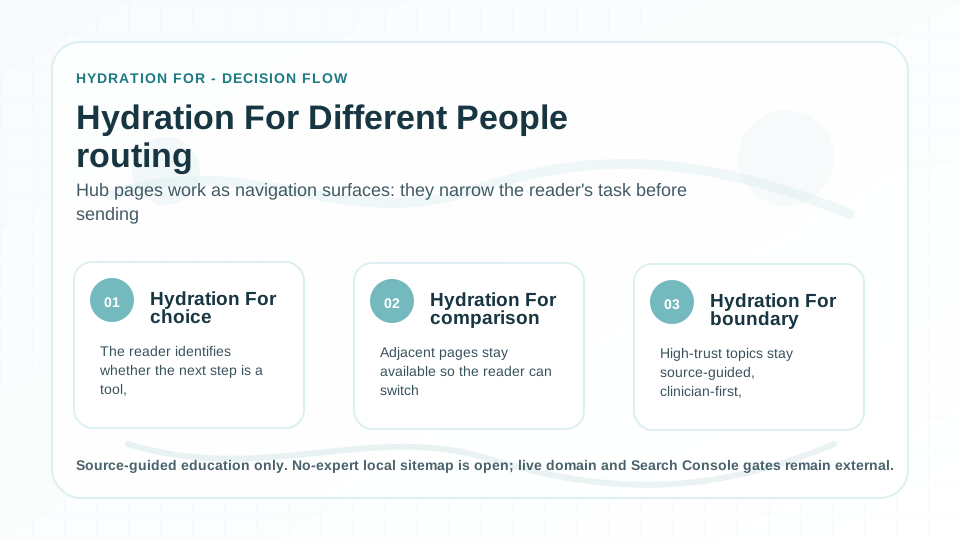
Hydration For Different People routing map
Hub pages work as navigation surfaces: they narrow the reader's task before sending them deeper.
The reader identifies whether the next step is a tool, person-specific page, seasonal page, or water-quality check.
Adjacent pages stay available so the reader can switch when their situation is more specific than expected.
High-trust topics stay source-guided, clinician-first, and separate from personal or local proof.
Start Hydration For Different People with the person, not the cup count
Guidance from American College of Obstetricians and Gynecologists and Cleveland Clinic frames this page as practical education for a specific reader task, not as a universal drinking rule or medical instruction. The useful question is whether ordinary hydration cues still fit this reader's age, care context, activity, and medical boundary.
Hydration For Different People is best for readers or caregivers who need a cautious way to adapt general advice before choosing a target.
The common mistake is applying adult daily-water rules before checking pregnancy, age, medication, sodium, kidney, heart, liver, or fluid-limit concerns.
Use the people-specific boundary before applying any general estimate. Keep the change small enough to observe, and make the person's risk boundary more important than the number.
Stop using the page for self-guidance when symptoms are serious, instructions already exist, or the person is medically complex.
Before You Use This Page
- Name the real situation before applying Hydration For Different People; the page is strongest when the reader has a concrete task.
- Use the next action first: Use the people-specific boundary before applying any general estimate.
- Check the exception line before making the advice personal: Pregnancy, infants, older adults, medications, and chronic disease need extra caution.
- Confirm the source context with American College of Obstetricians and Gynecologists before treating this as more than general education.
- Start with the person using the advice, including age, pregnancy, medications, activity, symptoms, and care setting.
- Keep changes small enough to observe, especially when sodium, kidney, heart, liver, or fluid limits could matter.
FAQ
Is hydration for different people medical advice?
Hydration For Different People is general education, not professional medical advice. It should not replace diagnosis, treatment, prevention, a clinician's instructions, or urgent care when symptoms are serious.
What should I check first for hydration for different people?
Use the people-specific boundary before applying any general estimate. For hydration for different people, the first check should match the actual task rather than defaulting to more water.
Who should be more cautious with hydration for different people?
Pregnancy, infants, older adults, medications, and chronic disease need extra caution. That means hydration for different people should be treated differently when symptoms, medical conditions, medications, pregnancy, infant care, older adult care, heat illness, or fluid restriction are involved.
What makes hydration for different people different from a general hydration rule?
Hydration For Different People changes the person applying the advice, so the safer question is whether general hydration cues still fit that person's age, condition, activity, or care context.
A first check for Hydration For Different People
Use the people-specific boundary before applying any general estimate. Start with the safest exception before applying an everyday hydration habit.
- Hydration For Different People changes who is applying the advice, so age, pregnancy, medication, care context, and symptoms matter first.
- Use ordinary cues only when the situation is stable, low risk, and not under clinician fluid instructions.
- Do not increase water aggressively when sodium, kidney, heart, liver, or fluid-restriction concerns apply.
- American College of Obstetricians and Gynecologists anchors this section for Pregnancy hydration boundary, daily fluid context, warning-sign caution, and clinician-first language.
Daily cues for Hydration For Different People
Use meals, refill points, thirst, urine pattern, heat exposure, and activity as gentle cues, then adjust only when the situation is ordinary and low risk.
- Hydration For Different People changes who is applying the advice, so age, pregnancy, medication, care context, and symptoms matter first.
- Use ordinary cues only when the situation is stable, low risk, and not under clinician fluid instructions.
- Do not increase water aggressively when sodium, kidney, heart, liver, or fluid-restriction concerns apply.
- Cleveland Clinic anchors this section for Dehydration symptom education, risk-factor context, and when-to-seek-care framing.
When Hydration For Different People should get professional input
American College of Obstetricians and Gynecologists and Cleveland Clinic support the general framing, but they do not verify an individual reader's health condition, home plumbing, product batch, race plan, or clinician instruction. Stop before turning this page into a personal fluid target. Pregnancy, infants, older adults, medications, and chronic disease need extra caution.
- Hydration For Different People changes who is applying the advice, so age, pregnancy, medication, care context, and symptoms matter first.
- Use ordinary cues only when the situation is stable, low risk, and not under clinician fluid instructions.
- Do not increase water aggressively when sodium, kidney, heart, liver, or fluid-restriction concerns apply.
- American College of Obstetricians and Gynecologists anchors this section for Pregnancy hydration boundary, daily fluid context, warning-sign caution, and clinician-first language.
What changes for Hydration For Different People
A reader needs the page to name who should ask a clinician first. The person changes the boundary: age, pregnancy, medication, work setting, activity, symptoms, or clinician instructions can matter more than a generic cup target.
- Hydration For Different People changes who is applying the advice, so age, pregnancy, medication, care context, and symptoms matter first.
- Use ordinary cues only when the situation is stable, low risk, and not under clinician fluid instructions.
- Do not increase water aggressively when sodium, kidney, heart, liver, or fluid-restriction concerns apply.
- Cleveland Clinic anchors this section for Dehydration symptom education, risk-factor context, and when-to-seek-care framing.