trust
References And Methodology
References And Methodology explains how the site stays cautious about sources, review status, and public launch boundaries. Use source anchors to understand broad framing, then verify local reports, product labels, or clinician instructions when needed. This References And Methodology page provides general education for generally healthy people and is not medical advice, diagnosis, treatment, prevention, or a personalized fluid prescription; A methodology page cannot prove a reader's local water quality, health condition, product batch, or emergency status.
This References And Methodology page provides general education for generally healthy people and is not medical advice, diagnosis, treatment, prevention, or a personalized fluid prescription; A methodology page cannot prove a reader's local water quality, health condition, product batch, or emergency status.
What To Do First
Use source anchors to understand broad framing, then verify local reports, product labels, or clinician instructions when needed.
When This Page Helps
A reader wants to know what the site treats as evidence and what it refuses to infer.
A methodology and evidence-boundary note.
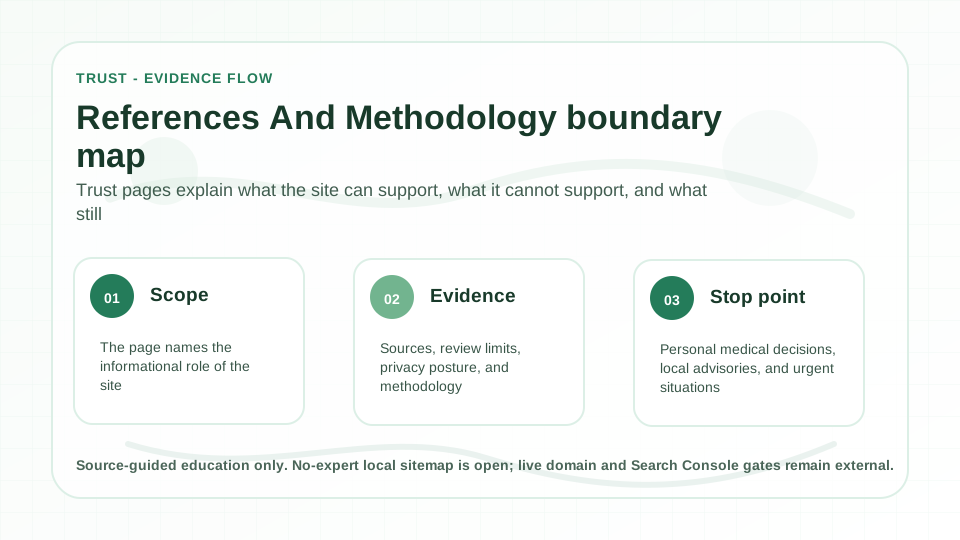
References And Methodology boundary map
Trust pages explain what the site can support, what it cannot support, and what still requires outside evidence.
The page names the informational role of the site before any reader treats it as personal guidance.
Sources, review limits, privacy posture, and methodology are separated from health or water-quality claims.
Personal medical decisions, local advisories, and urgent situations require qualified guidance or local authority instructions.
How to use References And Methodology without turning it into a rule
Guidance from Centers for Disease Control and Prevention and U.S. Environmental Protection Agency frames this page as practical education for a specific reader task, not as a universal drinking rule or medical instruction. The page should make the next step clear while keeping the safety boundary visible.
References And Methodology is best for readers who need a starting point and a practical path to the right tool or guide.
The common mistake is treating a general education page as a personalized target or diagnosis.
Use source anchors to understand broad framing, then verify local reports, product labels, or clinician instructions when needed. Then follow the linked page that matches the reader's real situation.
Stop using the page as self-guidance when symptoms, medical instructions, or local water evidence change the question.
Before You Use This Page
- Name the real situation before applying References And Methodology; the page is strongest when the reader has a concrete task.
- Use the next action first: Use source anchors to understand broad framing, then verify local reports, product labels, or clinician instructions when needed.
- Check the exception line before making the advice personal: A methodology page cannot prove a reader's local water quality, health condition, product batch, or emergency status.
- Confirm the source context with Centers for Disease Control and Prevention before treating this as more than general education.
- Use the page to choose the next guide, calculator, safety check, or water-quality check rather than browsing randomly.
- Return to the safety boundary whenever the reader's symptoms, context, or local evidence changes.
FAQ
Is references and methodology medical advice?
References And Methodology is general education, not professional medical advice. It should not replace diagnosis, treatment, prevention, a clinician's instructions, or urgent care when symptoms are serious.
What should I check first for references and methodology?
Use source anchors to understand broad framing, then verify local reports, product labels, or clinician instructions when needed. For references and methodology, the first check should match the actual task rather than defaulting to more water.
Who should be more cautious with references and methodology?
A methodology page cannot prove a reader's local water quality, health condition, product batch, or emergency status. That means references and methodology should be treated differently when symptoms, medical conditions, medications, pregnancy, infant care, older adult care, heat illness, or fluid restriction are involved.
What makes references and methodology different from a general hydration rule?
References And Methodology is different because the reader's next step changes the task, evidence, and safety boundary instead of asking for a universal hydration target.
What References And Methodology does not prove
Centers for Disease Control and Prevention and U.S. Environmental Protection Agency support the general framing, but they do not verify an individual reader's health condition, home plumbing, product batch, race plan, or clinician instruction. Stop before turning this page into a personal fluid target. A methodology page cannot prove a reader's local water quality, health condition, product batch, or emergency status.
- References And Methodology should answer the immediate reader task before sending the reader deeper.
- Use source anchors to understand broad framing, then verify local reports, product labels, or clinician instructions when needed.
- A methodology page cannot prove a reader's local water quality, health condition, product batch, or emergency status.
- Centers for Disease Control and Prevention anchors this section for Home water filter choice and contaminant-specific certification framing.
Related decision for References And Methodology
A methodology and evidence-boundary note. Use the page to choose a tool, a safety check, or a more specific guide.
- References And Methodology should answer the immediate reader task before sending the reader deeper.
- Use source anchors to understand broad framing, then verify local reports, product labels, or clinician instructions when needed.
- A methodology page cannot prove a reader's local water quality, health condition, product batch, or emergency status.
- U.S. Environmental Protection Agency anchors this section for Consumer Confidence Report guidance for checking local tap-water quality.
What References And Methodology answers
A reader wants to know what the site treats as evidence and what it refuses to infer. The page should answer the reader's immediate task before linking deeper.
- References And Methodology should answer the immediate reader task before sending the reader deeper.
- Use source anchors to understand broad framing, then verify local reports, product labels, or clinician instructions when needed.
- A methodology page cannot prove a reader's local water quality, health condition, product batch, or emergency status.
- Centers for Disease Control and Prevention anchors this section for Home water filter choice and contaminant-specific certification framing.
How to use References And Methodology
Use source anchors to understand broad framing, then verify local reports, product labels, or clinician instructions when needed. Keep the next step practical and low risk.
- References And Methodology should answer the immediate reader task before sending the reader deeper.
- Use source anchors to understand broad framing, then verify local reports, product labels, or clinician instructions when needed.
- A methodology page cannot prove a reader's local water quality, health condition, product batch, or emergency status.
- U.S. Environmental Protection Agency anchors this section for Consumer Confidence Report guidance for checking local tap-water quality.