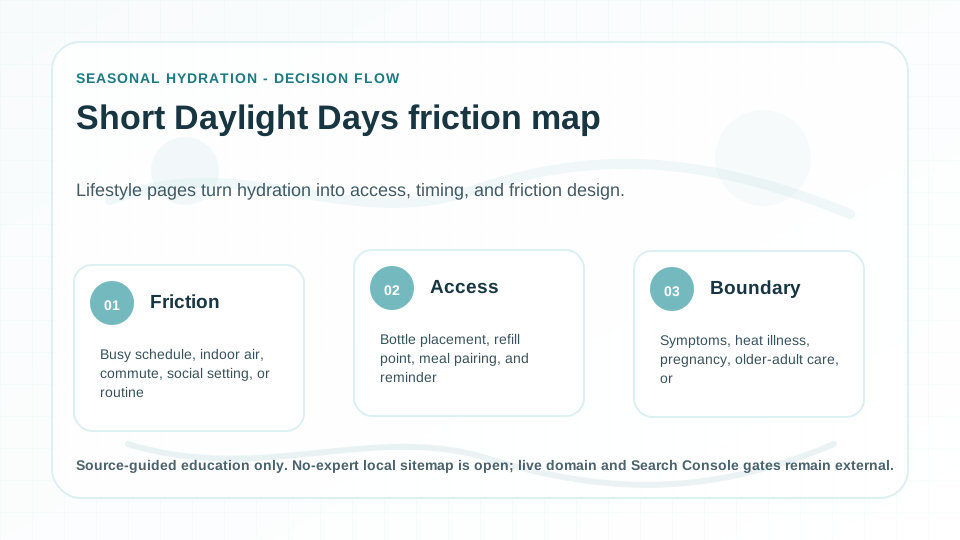
For Short Daylight Days, the first check begins with checking the forecast, exposure time, refill access, clothing, travel constraint, and warning signs before changing intake. Short daylight plan working question: What should you decide first in this short daylight plan exposure check, and which answer would be too broad for this situation. Short daylight plan should start by checking the forecast, exposure time, refill access, clothing, travel constraint, and warning signs before changing intake, then compare the answer with forecast, heat index, dry air, altitude, travel segment, refill access, local alert, clothing choice, or event duration; this short daylight plan exposure check becomes vague when it starts with a one-size water habit instead of the decision that changes the next step. If short daylight plan cannot point to a check, record, comparison, or qualified question, keep the idea as background and use only a small action such as carry, refill, compare, record, adjust, pause, or follow official weather and safety guidance.
Short daylight plan should treat Centers for Disease Control and Prevention and Cleveland Clinic as a boundary, not a shortcut; the evidence role is weather exposure, heat or dry-air risk, travel constraints, and official safety boundaries. Short daylight plan evidence note: Centers for Disease Control and Prevention, Cleveland Clinic, and NHS frame the evidence for this topic without proving a personal situation; The first sources separate general hydration context from the narrower weather, exposure, and safety-boundary evidence this guide can explain responsibly. Short daylight plan practical use: turn weather exposure, refill access, travel constraints, official alerts, and stop points into a specific check without filling in your symptoms, exact heat exposure, local alerts, medical limits, medication context, and emergency risk from a broad public source.
Short daylight plan scenario: someone arrives at Short Daylight Days with a routine, symptom cue, product question, or setting that needs a named decision before any steps make sense. Short daylight plan record can include the forecast, dry-air exposure, travel constraint, refill access, local alert, clothing choice, or event duration; A dry cabin, desert drive, humid event, winter sport, and heat wave each change access and warning signs differently. Short daylight plan setting check: the how conditions change the routine angle matters because a routine cue, a water-quality proof question, an exercise recovery issue, and a safety handoff can look similar until the setting is written down; use the setting to decide whether to read, calculate, check a label, open a report, or pause for qualified direction.
Short daylight plan mistake: the common mistake is answering with a fixed intake target before checking whether heat, cold, travel, exposure, or access constraints changes the safe interpretation. Short daylight plan correction: Start by naming the decision, then choose the smallest seasonal planning step that fits the actual situation; Plan the refill and stop point before turning the season into an aggressive target. Short daylight plan decision note: write down the fact that would change the answer before changing a habit, buying a product, extending a workout plan, or ignoring a warning sign.
Fall helps once Short Daylight Days turns into Fall narrows the short daylight plan refill plan for a seasonal access check; open it if weather, travel, dry air, altitude, event duration, or refill access differs is the fact that changes the next step; it narrows the next action without making a stronger claim. Short daylight plan boundary: Stop treating this as an ordinary decision when symptoms, official advisories, clinician instructions, or higher-risk people are involved; Heat illness signs, official alerts, travel advisories, medical restrictions, and symptoms should change the route immediately. The short daylight plan refill plan needs one last check: name the missing fact, then hand off when symptoms, restrictions, urgent changes, or personal medical context decide the issue.